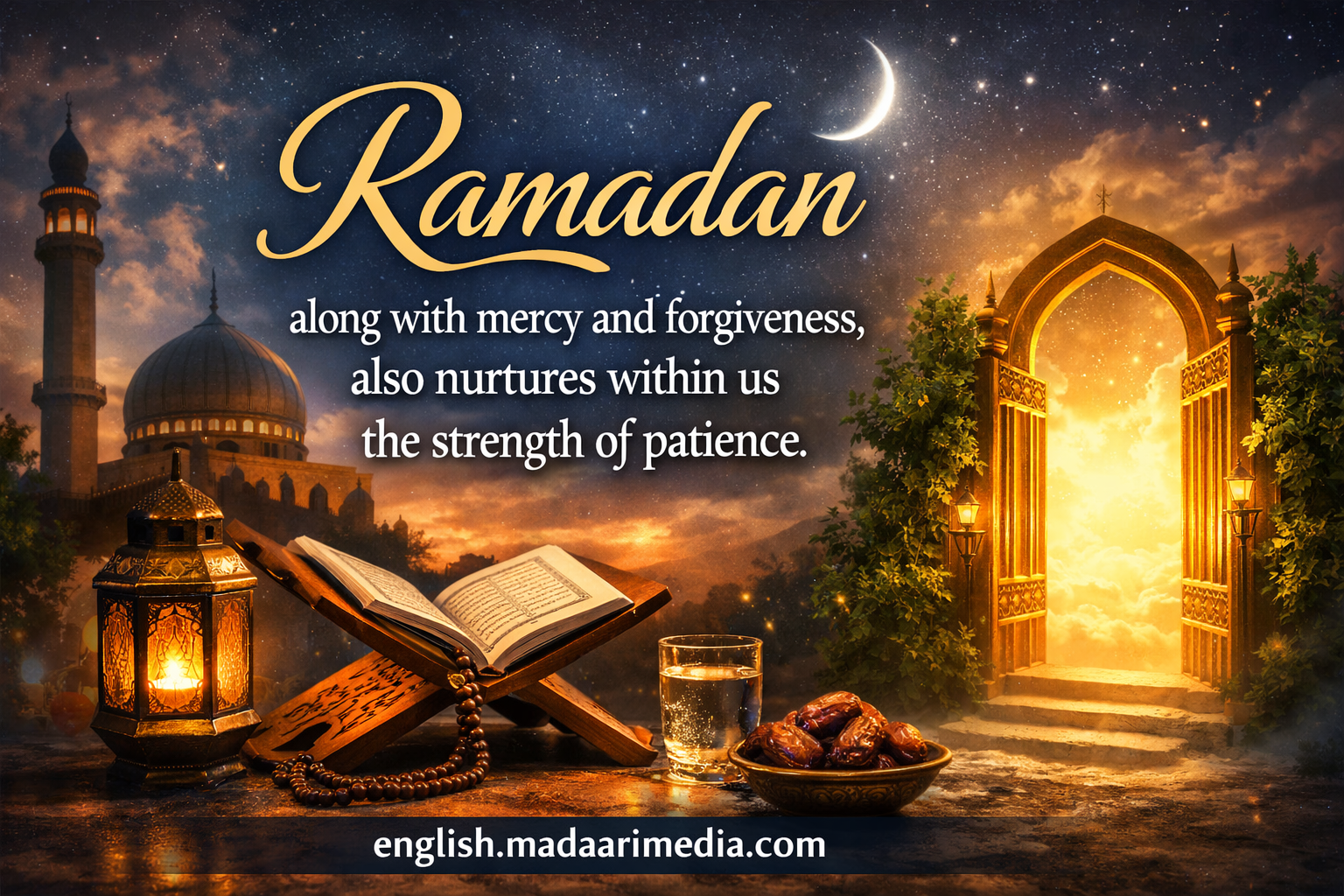
We are familiar with the word “Infaq,” whose literal meaning is “to spend or to give out wealth.” But have we ever reflected on why Allah Almighty kept us hungry for one month in a year? Does my Lord (God forbid) have any need for our hunger? Does He not see that His servant is writhing in thirst?
The Qur’an says: “Lan tanalul birra hatta tunfiqu mimma tuhibbun” (You will never attain true righteousness until you spend from that which you love). [3.92]
Generally, we assume that the beloved thing is only “money and wealth.” But remember! A person loves his “self,” his “comfort,” and his “ego” even more than his wealth. Fasting, in reality, is Infaq of the self. It is the act of offering one’s most beloved needs (food, drink, and desire) before Allah as “Infaq.”
The Understanding of Fasting
Commonly, people think that fasting simply means refraining from eating and drinking until sunset. But the true understanding of this pillar is “Infaq of desire.” Allah Almighty withheld you from lawful sustenance so that you may realize that if you can abandon even lawful things (water and bread), despite having the right to them, for the sake of Allah, then how necessary it is to abandon unlawful earnings, the wealth of an orphan, and the rights of the poor.
Fasting is like a “training camp” where a soldier is kept thirsty so that he may remain steadfast in the battlefield (practical life). If after training the soldier remains cowardly, then the training was merely a “ritual.” The true understanding of fasting is that at the time of Iftar, while sitting at your table, you worry more about the hunger of that widow whose stove has not been lit than about your own hunger.
People consider Zakat or charity as a financial burden or tax, whereas its true understanding is a test of love. A saint was asked, “How much is Zakat?” He replied, “For the common people, one-fortieth; for the lovers (of God), everything.”
The understanding of spending is that you are not merely giving wealth; you are removing the “love of the world” from your heart. Allah does not need your money; He desires the ache in your heart that arises when you see the suffering of others.
When we invite only the elite to a wedding feast, we are not expressing gratitude for Allah’s blessing but rather displaying our status. A Companion in Madinah once held a wedding feast and first seated the poor of the neighborhood. Someone said, “Invite the prominent people as well.” He replied, “The prominent are those whom Allah is pleased with when they are fed, not those who eat my food and then consider it a favor upon me.”
A fasting person can sit alone and break his fast. He has food, he is hungry, and he has the right to it. Yet he shares it with others. Why? Because he has understood pain. The Prophet ﷺ said that the one who provides Iftar will receive the same reward as the fasting person. This reward is not merely for the cost of the meal, but for the “sense of sharing” born in the host’s heart. He saw another’s thirst in the mirror of his own hunger.
For example, you throw pebbles at Satan! Why? What has Satan done to you? What sin did he commit? Only this—that he displayed arrogance, pride, and ego before our Lord. Thus, in Hajj, “Rami al-Jamarat” (stoning the devil) is in fact striking down Satan and the pride and arrogance within oneself. If a pilgrim returns from Makkah and still considers the poor insignificant, then he has thrown stones but has not slaughtered the Satan within. In reality, he has thrown those pebbles at himself. The training of Ramadan, the love of Hajj, and the sacrifice of Muharram together give birth to a person who embodies “Khairun-naas man yanfa‘un-naas” (The best of people are those who benefit others).
Remember the story of the beautiful soul of humanity, Prophet Yusuf (peace be upon him)! When he was the treasurer of Egypt, he would often remain hungry. Someone asked, “O Yusuf! You possess the خزائن of the land, then why do you stay hungry?” He replied with a historic statement that shakes our conscience even today: “I fear that if my stomach becomes full, I will forget the pain of the hungry.” (Ihya Ulum)
Another example is Abbas Alamdar. In the field of Karbala, Hazrat Abbas Alamdar’s going to the river and not drinking water is the greatest example of “Infaq of thirst.” When he filled his hands with water and brought it near his dry lips, he remembered Imam Husayn and the thirsty children. He poured the water back into the river. This is the ultimate meaning of “mimma tuhibbun”! He was thirsty, water was in his hand, no one was watching—yet the pain of others overcame his own need.
Abdullah bin Mubarak was traveling for Hajj when he saw a woman picking up a dead bird from the garbage. Upon asking, he learned she was a widow and her children had been starving for days. He gave her all the money he had saved for Hajj (his beloved wealth) and returned home. That year, a voice proclaimed from the unseen that “The Hajj of Abdullah bin Mubarak has been accepted, even though he did not reach Makkah.”
Once, a man came to Hazrat Junayd Baghdadi and said, “I worship a lot and fast regularly, but I do not feel the ‘pain’ and ‘softness of heart’ that I should.” He replied, “You may have given wealth in charity, but have you ever given what you personally love? Go and feed someone you dislike, or give in charity something without which your life feels difficult.” When the man gave away his favorite garment to a beggar, he experienced in prostration a sweetness he had never tasted in a thousand voluntary prayers.
Our Condition:
Today, our tragedy is that we refuse to eat food at a funeral saying “it belongs to the poor,” yet we indulge in extravagance at wedding feasts and Iftar parties—God protect us! We forget that our Prophet ﷺ said: “The worst food is that wedding feast to which the rich are invited and the poor are excluded.” If after fasting we still do not create space in our hearts for the poor, then we have merely changed our meal schedule, not our destiny or character. This is the greatest tragedy of our time. When the spirit (understanding) leaves worship and ritual, it becomes merely an exercise or a burden.
A saint once performed Hajj. Upon returning, someone asked, “How was the Kaaba?” He wept and said, “I went there seeking the Lord of the Kaaba, not the stones.” The true understanding of Hajj is that a person spends everything and becomes Allah’s. If after Hajj one’s ego is not broken, then he has performed the ritual but not attained its understanding. Similarly, the real purpose of fasting is to discipline the self. Otherwise, what does Allah gain by keeping you hungry? Allah only desires awakening. One who understands fasting begins to feel disturbed by the hunger of the poor. He realizes that his pre-dawn morsel is not truly accepted while his neighbor is restless.
Divine Order and Purpose
Ramadan: In Ramadan, we learned to spend our hunger, thirst, and desires (training).
Shawwal: Immediately after Eid comes Shawwal, which tests whether that “compassion” remained at the Eid table or was lost in displays of feasts. The six fasts of Shawwal symbolize the continuation of this training.
Dhul-Qa‘dah: A month of quiet preparation, when the soul longs for the sight of the Kaaba.
Dhul-Hijjah: Hajj is truly “complete Infaq.” The pilgrim spends his home, comfort, stitched garments (ego), wealth, and time for Allah. The Tawaf declares that the center of my life is only You.
Muharram: The great lesson of sacrifice. If Ramadan taught “hunger,” Karbala taught steadfastness in the extreme of thirst. Imam Husayn (peace be upon him) performed such Infaq in Karbala that the universe has never seen its equal. He did not only give wealth, but his entire family, his young sons, and even his life in the path of Allah. A fasting person breaks his fast in the evening, but the warriors of Karbala broke their three-day thirst with martyrdom and the vision of their Lord.
We eat at Suhoor so that we may fulfill the fast of the day (preparation). Likewise, Ramadan exists so that we may uphold the “fast of humanity” for the remaining eleven months.
The purpose of fasting is to make us compassionate. Allah gains nothing from our hunger; He wants to see the tenderness that hunger produces. He wants to see whether the intensity of thirst in the scorching afternoon reminds you of someone thirsty. Whether the abundance of your Iftar table makes you think of a neighbor with empty hands. If we have not spent our ego, arrogance, and extravagance, then our fasting is merely a ritual.
Let us pledge that we will make fasting not merely a hardship, but a “training ground of compassion,” so that when we celebrate Eid, our hearts are filled with the peace that we did not merely endure hunger, but shared the pain of Allah’s servants.