From the serene and spiritually rich atmosphere of Madinah Tayyibah, the gentle breeze of dawn and the cool air of the early morning were about to spread their calm across the land. As was his noble habit, the beloved caller of the Messenger of Allah ﷺ stepped out from the blessed household—often described as the dwelling of divine mercy and the place where heavenly light descended—to awaken the believers for the Fajr prayer.
As he stepped outside, an unusual scene unfolded. A flock of ducks approached him with visible agitation. They gathered around him, spreading their wings and making distressed sounds, as if trying to stop him from leaving. The people nearby attempted to move the birds away, but the wise and perceptive master said calmly, “Do not stop them. Let them mourn today.”
This moment, remembered in later narrations, was seen by many as a mysterious sign of the tragedy that was about to unfold.
The Foreknowledge of Martyrdom
Imam Ali ibn Abi Talib (RA), known for his deep spiritual insight, had indications of what was to come. According to the famous work “Shawahid al-Nubuwwah” by the renowned scholar Allama Abdur Rahman Jami (RA), there was an incident in which Abdur Rahman ibn Muljam—later the assassin—was seen walking in the mosque of Kufa.
When Imam Ali (RA) looked at him, he uttered words that hinted toward a dark destiny awaiting the man. Later, he called Ibn Muljam and asked him about certain thoughts he may have had during his earlier life. The conversation ended with Imam Ali remaining silent, as if he already understood what fate held.
Respected readers can see from this that Imam Ali (RA) recognized the man who would eventually become his killer. Yet despite this knowledge, his conduct remained guided by mercy, justice, and unwavering adherence to the principles of faith.
It is also reported that Imam Ali once saw the Prophet Muhammad ﷺ in a dream and complained about the hardships caused by some people of the community. The Prophet ﷺ advised him to pray that Allah might call him among the righteous. Imam Ali prayed accordingly, and his prayer was accepted.
The Prophetic Prediction
On another occasion when Imam Ali (RA) became severely ill, the Prophet Muhammad ﷺ visited him. Imam Ali expressed concern that his passing might be near. The Prophet ﷺ responded with a prophecy:
“Not yet, O Ali. Your time will come when your beard will be dyed red with your blood.”
Years later, that prophecy would tragically come true.
The Conspiracy in Kufa
By the year 40 AH, the political climate had become tense. Among those who plotted against Imam Ali was Abdur Rahman ibn Muljam al-Muradi, a member of the extremist Kharijite faction. In Makkah he had sworn an oath that he would assassinate Imam Ali.
He traveled to Kufa and entered the city on 20 Sha’ban, 40 AH, preparing carefully for his plan. Among those who encouraged him were his associate Shabib ibn Bujrah and a woman named Qatam bint Alqamah, who reportedly incited the conspirators and strengthened their resolve.
Another figure associated with the plot was Ash’ath ibn Qays al-Kindi, a politically manipulative and hypocritical personality who had influence among certain factions of soldiers. Historical accounts suggest that he secretly supported the conspirators and emboldened them in their plan.
The Fateful Morning: 19th Ramadan
On the dawn of 19th Ramadan, 40 AH, the conspirators lay in wait inside the Grand Mosque of Kufa.
Imam Ali (RA), as was his daily practice, entered the mosque for the Fajr prayer and began waking those who were sleeping inside. Among them was none other than Ibn Muljam himself, who was lying face down on the ground. Imam Ali gently awakened him and told him to stand for prayer.
This moment has often been remembered as one of the most striking examples of Imam Ali’s noble character: even the man who intended to murder him was called toward prayer.
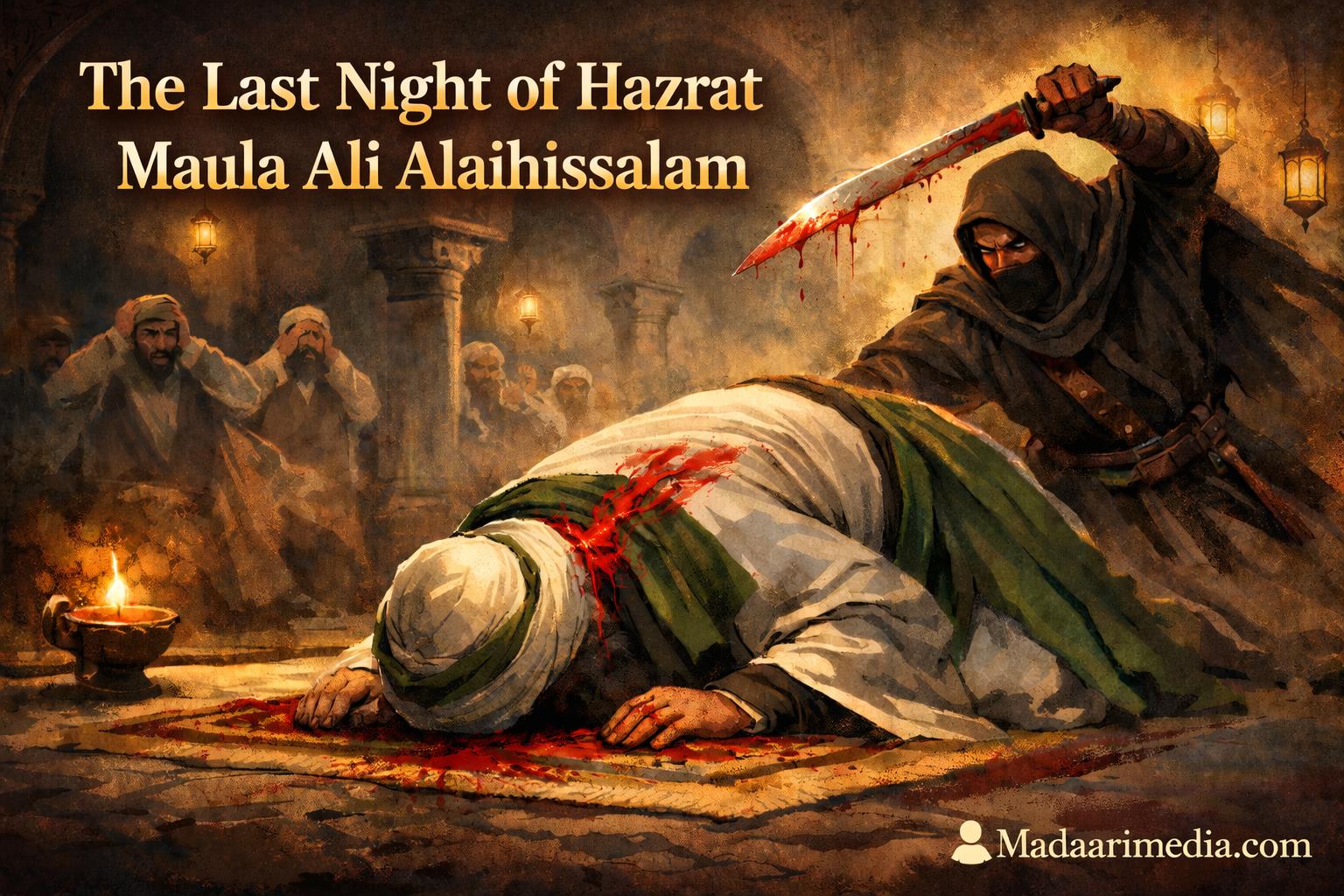
When Imam Ali entered the mihrab and began the congregational prayer, the moment of tragedy arrived. As he raised his head from the first prostration, Shabib ibn Bujrah attempted to strike him with a sword. The blow missed and struck the arch of the mihrab instead.
Immediately afterward, Abdur Rahman ibn Muljam shouted:
“Judgment belongs only to Allah, O Ali! It belongs neither to you nor to your companions!”
With that cry he struck Imam Ali on the blessed head with a sword that had been poisoned for weeks. The blow split his head down to the place of prostration, and Imam Ali collapsed in the mihrab.
“By the Lord of the Kaaba, I Have Succeeded”
Despite the mortal wound, Imam Ali uttered words that have echoed through history:
“Bismillah wa billah wa ‘ala millati Rasulillah. Fuztu wa Rabbil Ka‘bah.”
“In the name of Allah, and by Allah, and upon the religion of the Messenger of Allah. By the Lord of the Kaaba, I have succeeded.”
Chaos spread inside the mosque. Some worshippers rushed to capture the attackers, while others ran toward Imam Ali in grief and shock.
With blood flowing from his blessed head, Imam Ali calmly said:
“This is the promise that Allah and His Messenger had made to me.”
Because of his severe injuries he could no longer lead the congregation, so he instructed his son Imam Hasan (RA) to continue leading the prayer while he completed his own prayer sitting.
Cosmic Grief
Historical narrations describe the atmosphere as if nature itself mourned the tragedy. It is said that the earth trembled, the waters stilled, the sky darkened, and voices of angels were heard.
Angel Jibreel (Gabriel) was reported to have proclaimed:
“By God, the pillars of guidance have been broken.
The signs of piety have been extinguished.
The strongest bond has been severed.
The cousin of the Chosen Prophet has been killed.
Ali al-Murtada has been killed by the most wretched of the wretched.”
Justice Even Toward the Assassin
When Ibn Muljam was captured and brought before the wounded Imam Ali, he gave remarkable instructions:
“Treat him well. Feed him and provide him proper lodging. If I survive, I will decide whether to punish or forgive him. If I die, then execute him in the same manner as he killed me—but do not exceed the limits, for Allah does not love those who transgress.”
Such words revealed the extraordinary justice and restraint that defined Imam Ali’s character even in the face of death.
The Final Days
Imam Ali was carried from the mosque to his home. The attack had occurred on Friday morning, the 19th of Ramadan, 40 AH.
For two days he endured severe pain from the poisoned wound. Finally, on the 21st of Ramadan, unable to overcome the severity of the injury, he embraced martyrdom.
News of his passing plunged the entire city into grief. Mourning spread throughout Kufa.
Funeral and Burial
Preparations for his funeral began immediately. His sons Imam Hasan (RA) and Imam Husayn (RA), along with Abdullah ibn Ja‘far, performed the ritual washing and shrouding of his blessed body.
According to a narration cited by Allama Abdur Rahman Jami, Imam Husayn reported hearing a mysterious voice saying:
“Leave this servant of God with us.”
When they returned inside later, the body had already been prepared for burial. The funeral prayer was then led by Imam Hasan (RA).
Thus departed from this world one of the greatest personalities in Islamic history.
The Legacy of Imam Ali
Imam Ali (RA) is remembered across the Muslim world with countless titles of honor:
The Lion of God,
The Conqueror of Khaybar,
The Commander of the Faithful,
The Leader of the Pious,
The Father of Hasan and Husayn,
The Husband of Lady Fatimah (RA),
The Defender of justice,
The protector of orphans,
The helper of the poor,
The successor and cousin of the Prophet Muhammad ﷺ.
His courage, knowledge, justice, and devotion left a lasting mark on Islamic civilization.
Conclusion
The martyrdom of Imam Ali on the 21st of Ramadan remains one of the most sorrowful moments in Islamic history. His life was a shining example of faith, courage, compassion, and unwavering commitment to truth.
Though the world lost a great leader that day, his legacy continues to inspire millions of believers across generations.
May Allah send countless blessings and mercy upon the resting place of Imam Ali ibn Abi Talib (RA).
Written by:
Syed Azbar Ali Madari