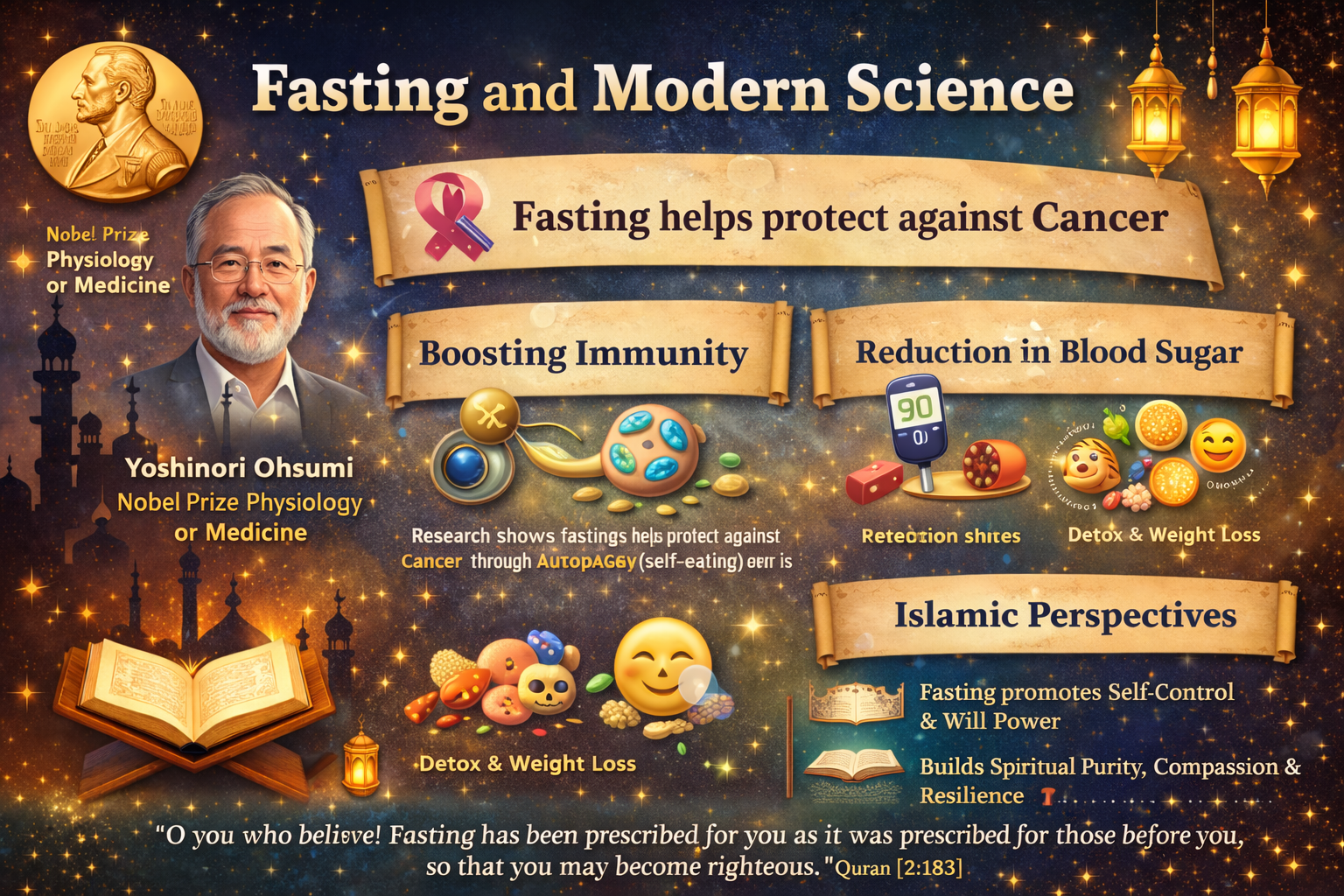
Japan’s great biologist Yoshinori Ohsumi was awarded the Nobel Prize in Physiology or Medicine for discovering a reasonable method related to protection against cancer. In his research, he clarified that if a person remains without food and drink for 14 to 15 hours continuously for 20 to 25 days every year, the chances of cancer in the body become extremely low.
It is worth noting that when we are in a fasting state, our body experiences a shortage of nutrients. To compensate for this shortage, the body begins consuming some of its own damaged or decayed cells as nourishment. This process was named Autophagy or self-eating by him, since the body automatically consumes its affected parts. Therefore, if we want protection from cancer, we should observe the fasts of Ramadan regularly.
Apart from this, impressed by the benefits obtained from fasting, biologists have conducted extensive research on fasting. They studied how fasting influences human mental, physical, and spiritual abilities. For example, improvement of self-control and willpower. During fasting, the functions of the brain improve significantly. If there is any imbalance in brain neurotransmitters, they also tend to return to normal condition. As a result, a fasting person gains increased confidence and stronger willpower, enabling them to give up habits that were otherwise difficult to abandon during normal days.
Second Major Benefit: Boosting Immunity
When a person endures hunger and thirst while fasting and the body lacks food supply, the body begins using energy very carefully. The body tries to preserve energy by recycling immune cells. Immune cells that have stopped functioning or become inactive are removed, and gradually new cells are produced in their place. As a result, the fasting person regains stronger immunity and improved resistance against diseases.
Third Benefit: Reduction in Blood Sugar
It is well known that an excess of sugar in the body is called high blood sugar. The pancreas, a gland located near the stomach, releases insulin, a hormone that regulates blood sugar levels. When blood sugar is high, the pancreas must release more insulin, which eventually exhausts it. During fasting, the body begins using stored glucose already present in the body, reducing glucose levels in the bloodstream. Consequently, the pancreas releases less insulin, gets rest, and its functioning improves.
Fourth Benefit: Detoxification and Weight Loss
Many harmful substances (toxins) enter the human body through food and accumulate with fat, causing harm. When a person fasts and receives less food, the body breaks down fats to obtain energy. During this process, toxins are released from the body. This process benefits the fasting person and helps maintain body balance and health.
Fifth Benefit: Restoration of Taste Appreciation and Feeling of Happiness
The pleasure of food experienced at iftar is rarely felt on normal days. Research also indicates improvement in the functioning of taste buds on the tongue, enabling fasting individuals to enjoy flavors more intensely. Additionally, the release of the hormone endorphin increases, making the fasting person feel happier and more satisfied.
Islamic Perspective
Islam introduced this unparalleled act of worship filled with immense goodness and blessings, benefiting all humanity. A person fasts purely out of deep love for Allah and in hope of earning His pleasure, dedicating themselves to faith and enjoying the spiritual impact of fasting. A fasting person avoids betrayal or disobedience both openly and secretly. No worldly authority can force someone to fast; it is done solely for the love of Allah.
Temporary deprivation during fasting creates patience and selflessness, and it also helps a person understand the suffering of those who lack basic necessities for long periods. This awareness develops compassion and social responsibility. Such a person learns to control desires and rise above personal temptations.
Medical guidance and human experience confirm that an empty stomach, not burdened by excessive food, helps maintain mental clarity and spiritual purity. Giving the stomach rest also protects the body from diseases caused by overeating.
Fasting also teaches wise budgeting and balanced spending habits. Reduced food intake lowers expenses and effort, making fasting a form of spiritual economic discipline that helps reorganize daily life and develop adaptability in facing unexpected challenges.
When the entire Muslim community fasts at the same time and for the same purpose, it strengthens social unity, brotherhood, equality, and discipline. Fasting is a divine prescription that fosters self-control, dignity, freedom, success, and peace. A fasting person maintains control over actions and emotions, restrains desires, and resists temptations, ultimately regaining self-respect and moral integrity while strengthening their connection with God.
Quranic Teaching on Fasting
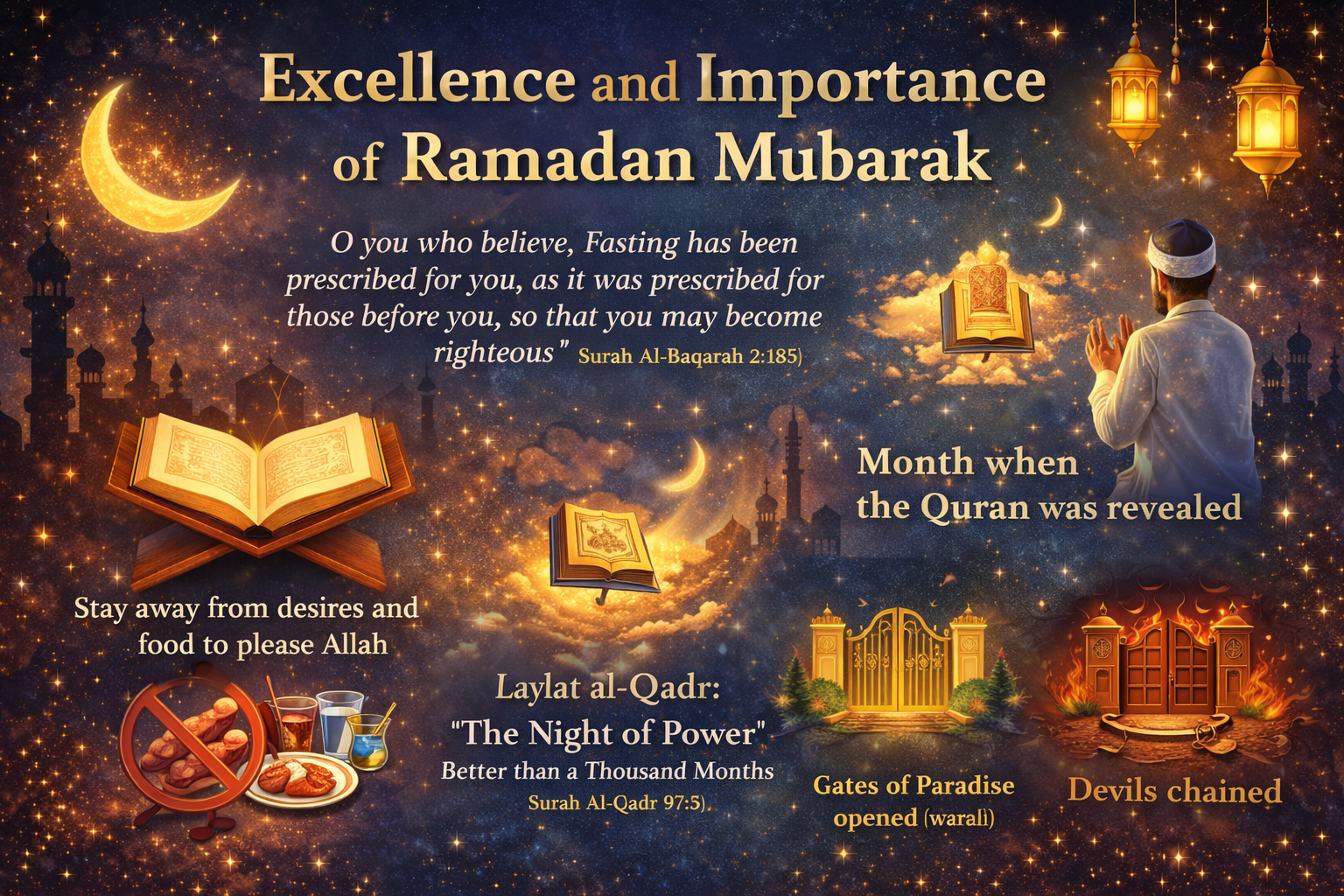
“O you who believe! Fasting has been prescribed for you as it was prescribed for those before you, so that you may become righteous.”
Fasting is as old as human civilization and existed even before Islam, although its exact forms in previous communities are not fully known. In many religions, fasting involves abstaining from certain foods while still allowing heavy eating otherwise. However, Islamic fasting requires complete abstinence from food and drink during fasting hours so that spiritual purification, compassion, and self-discipline may be achieved.
Voluntary Fasts Beyond Ramadan
Apart from Ramadan, fasting is also encouraged on certain occasions according to Prophetic tradition, such as Mondays and Thursdays, certain days in Rajab and Sha‘ban, and six fasts after Eid al-Fitr. Some types of fasting are discouraged for certain people.
One such type is Saum Wisal, continuous fasting without breaking it at night, which the Prophet Muhammad ﷺ discouraged his companions from practicing. When asked why he himself sometimes practiced it, he replied that Allah provided him sustenance in a special way.
It is narrated that Hazrat Syed Ahmad Badiuddin Qutb al-Madar, also known as Zinda Shah Madar, was granted permission for this form of fasting and is said to have maintained it for many years. It is said that Allah granted him an extraordinary spiritual state, and he once remarked:
“The world is but a single day in which I remain fasting.”
Hazrat Maulana Syed Iqtida Hussain Jafri Madari