In the Name of Allah, the Most Merciful, the Most Compassionate
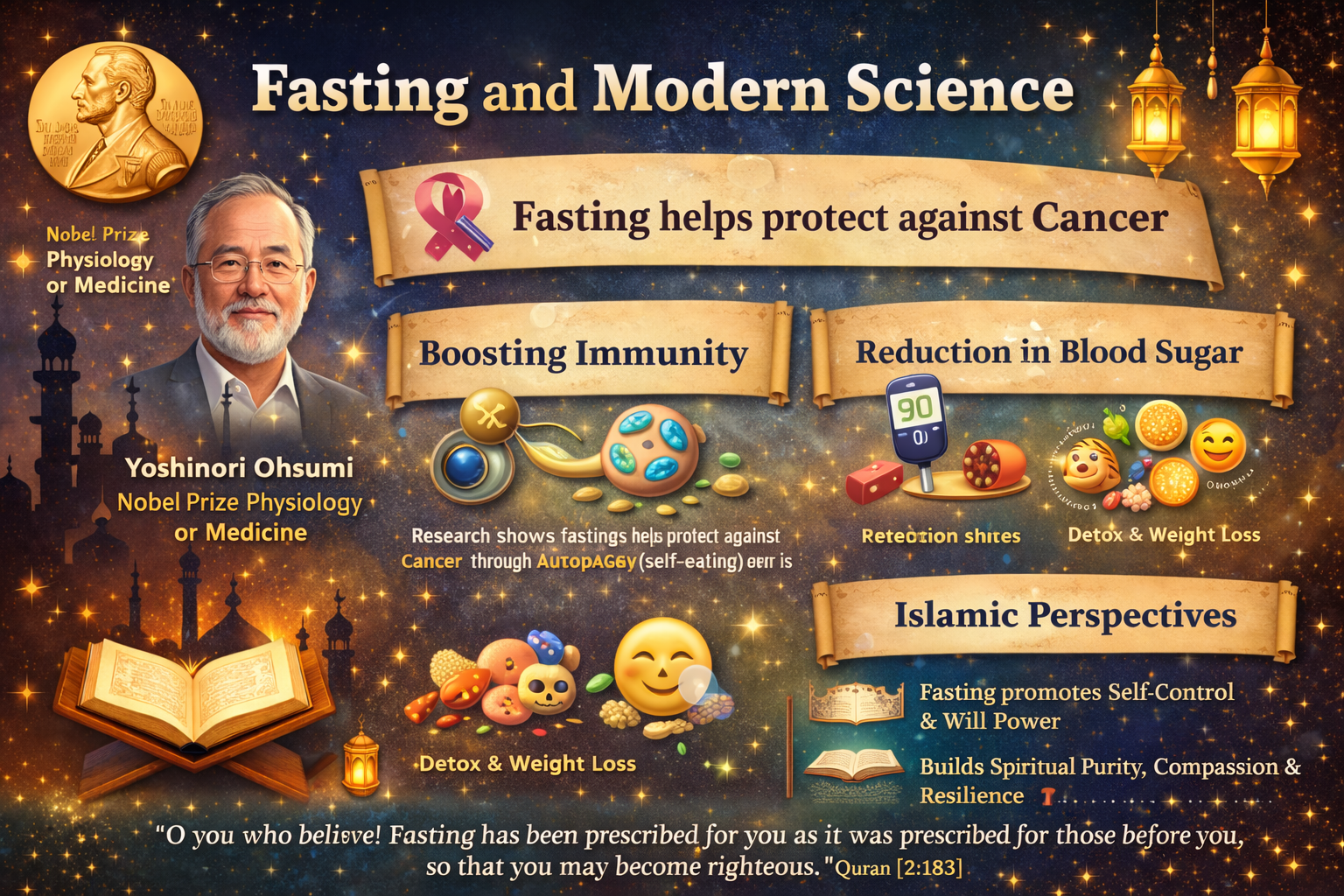
O you who believe! Fasting has been prescribed for you as it was prescribed for those before you, so that you may become righteous.
(Surah Al-Baqarah, Verse 183)
“O believers, fasting has been made obligatory upon you just as it was made obligatory upon those before you, so that you may become pious.”
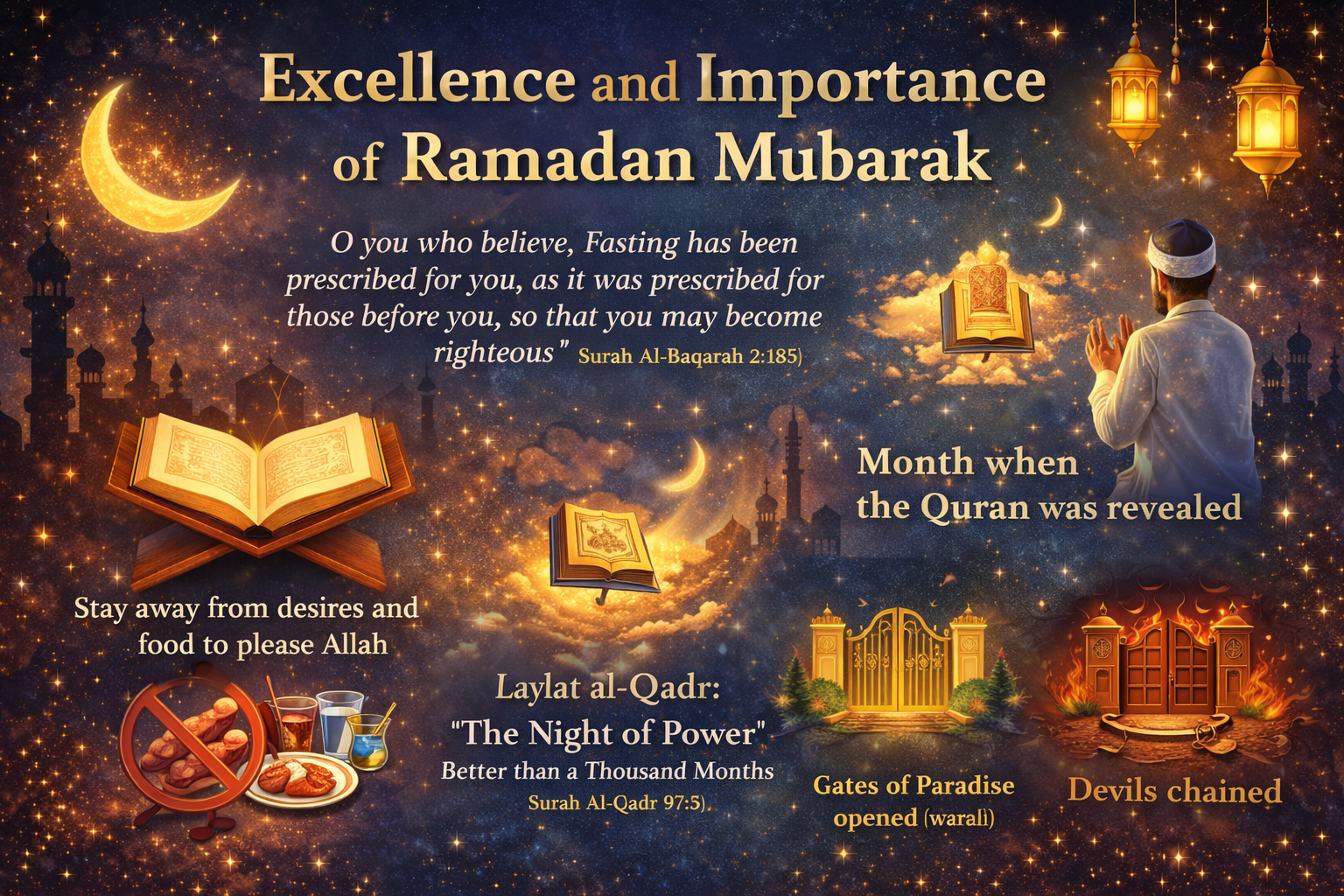
In the Arabic language, the word used for fasting is Saum, which means to abstain or refrain. That is, a person abstains from desires and from eating and drinking solely for the pleasure of Allah Almighty from dawn until sunset, and restrains all parts of the body from wrongdoing.
The word Ramadan is derived from “Ramda,” which refers to the rain that falls before the autumn season and cleans the earth from dust and impurities. For Muslims, this month is like a rain of mercy from Allah Almighty through which the sins of believers are washed away.
Ramadan Mubarak is that blessed month in the Islamic calendar in which Allah Almighty revealed the Holy Qur’an. On one blessed night of Ramadan, the entire Qur’an descended to the lowest heaven. Therefore, Allah, the Lord of Glory, granted superiority to this night over all others and declared it Laylat al-Qadr, saying:
“Laylat al-Qadr is better than a thousand months.”
(Surah Al-Qadr, Verse 3)
Laylat al-Qadr is better than a thousand months in virtue, blessing, and reward.
Imam Malik (may Allah have mercy on him) states:
(Muwatta Imam Malik, Book of I‘tikaf, Chapter regarding Laylat al-Qadr, Egypt edition)
He heard from some reliable scholars that the Messenger of Allah (peace and blessings be upon him) was shown the lifespans of people before his nation, and it seemed to him that the lifespan of his Ummah was shorter than theirs. Because of this, his Ummah might fall behind them in good deeds since earlier people were given longer lives. Therefore, Allah Almighty compensated for this by granting Laylat al-Qadr to the Ummah of Muhammad.
Among the sayings of the Holy Prophet (peace and blessings be upon him) concerning the virtues and blessings of Ramadan are the following:
Hazrat Abu Huraira (may Allah be pleased with him) narrated that the Prophet (peace be upon him) said:
“When Ramadan begins, the gates of Paradise are opened, the gates of Hell are closed, and the devils are chained.”
(Sahih Bukhari, Book of Creation, Hadith No. 3103)
The distinctive honor and virtue of fasting in Ramadan can be understood from another saying of the Prophet (peace be upon him).
Hazrat Abu Huraira (may Allah be pleased with him) narrated that the Prophet (peace be upon him) said:
“Whoever fasts during Ramadan with faith and seeking reward, his previous sins will be forgiven.”
(Sahih Bukhari, Book of Tarawih Prayer, Hadith No. 1910)
Every moment of Ramadan Mubarak is filled with such blessings and success that the remaining eleven months together cannot equal it.
Regarding the virtue of standing in prayer during Ramadan, Hazrat Abu Huraira (may Allah be pleased with him) narrated that the Prophet (peace be upon him) said:
“Whoever stands in prayer during Ramadan with faith and seeking reward, all his previous sins will be forgiven.”
(Sahih Bukhari, Book of Faith, Hadith No. 37)
“Fasting is a shield by which a servant protects himself from the Fire.”
(Sahih al-Jami‘, Hadith 7683)
Another narration states:
“Fasting is a shield from the punishment of Allah.”
(Sahih al-Jami‘, Hadith 6683)
In another Hadith, the Prophet (peace be upon him) said:
“Whoever fasts for one day in the path of Allah, Allah will distance his face from Hellfire by seventy years.”
(Sahih Bukhari & Sahih Muslim)
The Prophet (peace be upon him) also said:
“Indeed, in Paradise there is a gate called Ar-Rayyan through which only those who fast will enter.”
(Sahih Bukhari & Sahih Muslim)
Maulana Syed Tariq Hussain